You can read a specialty menu and order with confidence, or you can stare at it hoping “cortado” is just a fancy latte. We’ve made every drink on this list in our own kitchen, so this is the guide we wish someone had handed us before we bought a $250 machine. The good news: most of these drinks are about ratios, not gear.
Every coffee drink falls into one of four families. Espresso-only drinks (espresso, ristretto, lungo, Americano, long black) start with a 1:2 ratio shot pulled at 9 bar. Espresso + milk drinks (latte, cappuccino, flat white, cortado, macchiato) layer steamed milk and foam in different proportions, with milk steamed to 140–145°F to keep it sweet. Black filter coffee (drip, pour-over, French press) skips espresso entirely and brews ground coffee with hot water. Cold drinks (cold brew, iced coffee, espresso tonic) are either brewed cold over 14–18 hours or chilled after brewing. The home-kitchen reality: you do not need a $250 espresso machine for most of these. A $60 Bialetti Moka Express plus a handheld milk frother makes legitimate lattes and cappuccinos at home, and a French press or pour-over costs less than $50.
The espresso foundation: shot sizes and what they mean
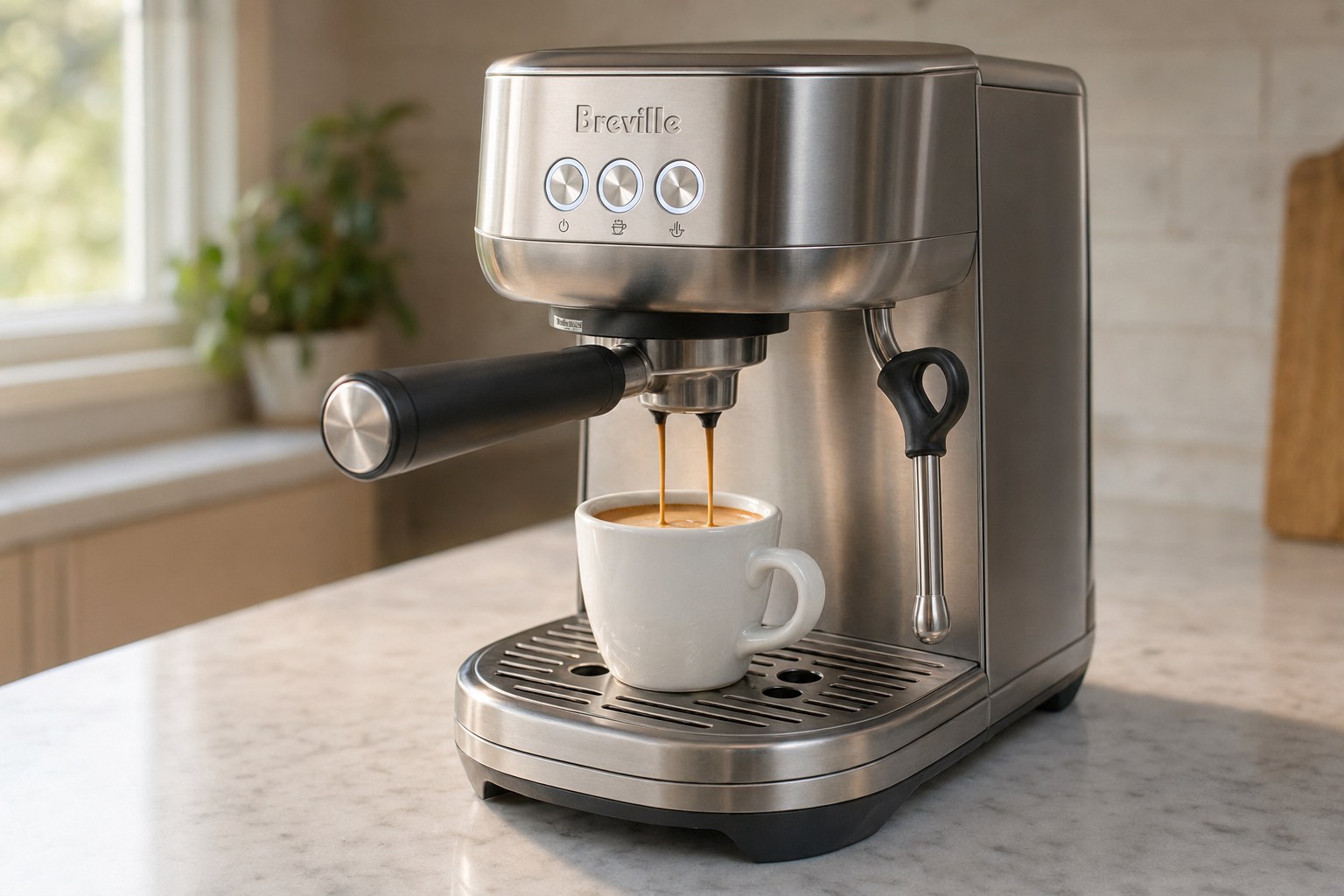
A real espresso shot is brewed under 9 bars of pressure, which creates the crema (the tan-colored foam on top) and concentrates the flavor into something thick and intense. We pull shots at home on a Breville Bambino ($249.95), and on weekends when we want to play it more rustic, we use a Bialetti Moka Express ($59.99) on the stovetop. The Moka Express tops out around 1–2 bar, so technically it makes strong concentrated coffee, not true espresso. The flavor is close enough that nobody at the kitchen table notices.
Once you can pull a single shot, every other espresso drink is a variation on volume and water. A ristretto is the same dose restricted to half the output, which makes it sweeter and more syrupy. A lungo runs longer, which pulls more bitter compounds and produces a drier shot. An Americano is a shot diluted with hot water poured in after. A long black flips that order: water in the cup first, then espresso poured over the top so the crema survives.
| Drink | Volume | Brew Ratio | Extraction Time | At Home |
|---|---|---|---|---|
| Espresso | 0.85–1.2 oz | 1:2 (18 g in, 36 g out) | 25–30 sec | Breville Bambino ($249.95) or Bialetti Moka Express ($59.99) |
| Ristretto | 0.5–0.75 oz | 1:1 to 1:1.5 | 15–20 sec | Espresso machine only — sweeter, more syrupy |
| Lungo | 2–2.5 oz | 1:3 to 1:4 | 35–45 sec | Espresso machine only — drier, more bitter |
| Americano | 6–8 oz | Espresso + 4–6 oz hot water | N/A | Any espresso source + hot water |
| Long Black | 4–5 oz | Espresso poured over 2–3 oz water | N/A | Any espresso source — crema preserved |
Espresso + milk: the ratio is what makes each drink different
Once we figured out that a latte, cappuccino, flat white, and cortado are the same two ingredients in different proportions, the menu got a lot less intimidating. The variables are simple: how much espresso, how much milk, and what texture the milk has. That third one is the part that trips people up.
There are two kinds of textured milk you’ll encounter. Microfoam is what you get from a steam wand: the milk is heated and aerated in the same motion until it looks like wet paint, with bubbles so fine you can barely see them. That’s what makes latte art possible. Airy foam is what you get from a handheld frother (or the standalone frothers attached to drip machines): a thick, dry foam that sits on top in a distinct layer. Airy foam works great for cappuccinos because the drink calls for a separate foam cap. It does not work for lattes because there’s nothing to pour into a heart shape.
Whichever method you use, target your milk temperature at 140–145°F. Above 145°F the lactose starts to scorch and the milk turns from sweet to flat (Breville’s training material is the source we trust on this). If you’re using a handheld frother, a small thermometer clipped to your pitcher solves the guesswork.
| Drink | Espresso | Milk | Milk Texture | Total Size |
|---|---|---|---|---|
| Latte | 1.5–2 oz | 6–10 oz | Microfoam (0.2 in) | 8–12 oz total — creamy and mild |
| Cappuccino | 1.5–2 oz | 1.5–2 oz steamed + 1.5–2 oz foam | Airy foam (0.4 in+) | 5–6 oz total — equal thirds |
| Flat White | 2 oz (double ristretto) | 3–4 oz | Tight microfoam (0.2 in) | 5–6 oz total — espresso-forward |
| Cortado | 2 oz | 2 oz | Minimal, lightly steamed | 4 oz total — the 1:1 balance drink |
| Macchiato | 1–1.5 oz | 1–2 tbsp foam only | Airy foam | 1.5–2.5 oz — espresso stained with foam |
The cortado is the most misunderstood drink on the list. It came out of Spain, and the name comes from the verb cortar, “to cut.” The milk cuts the espresso. The ratio is 1:1, which is why the drink is so small. In the United States it often shows up on menus as a Gibraltar (named after the glass, a 4.5 oz tumbler from Libbey). In Australia the same drink is called a piccolo. In France it’s a noisette. We make cortados when we want to actually taste the coffee but soften the edge a little.
A macchiato is the smallest drink in the family: a shot with a small dollop of foam on top, nothing more. If you’ve been ordering “caramel macchiatos” at Starbucks, that’s a different drink, a sweetened latte with the macchiato name attached for marketing. A real macchiato is 1.5 oz total.
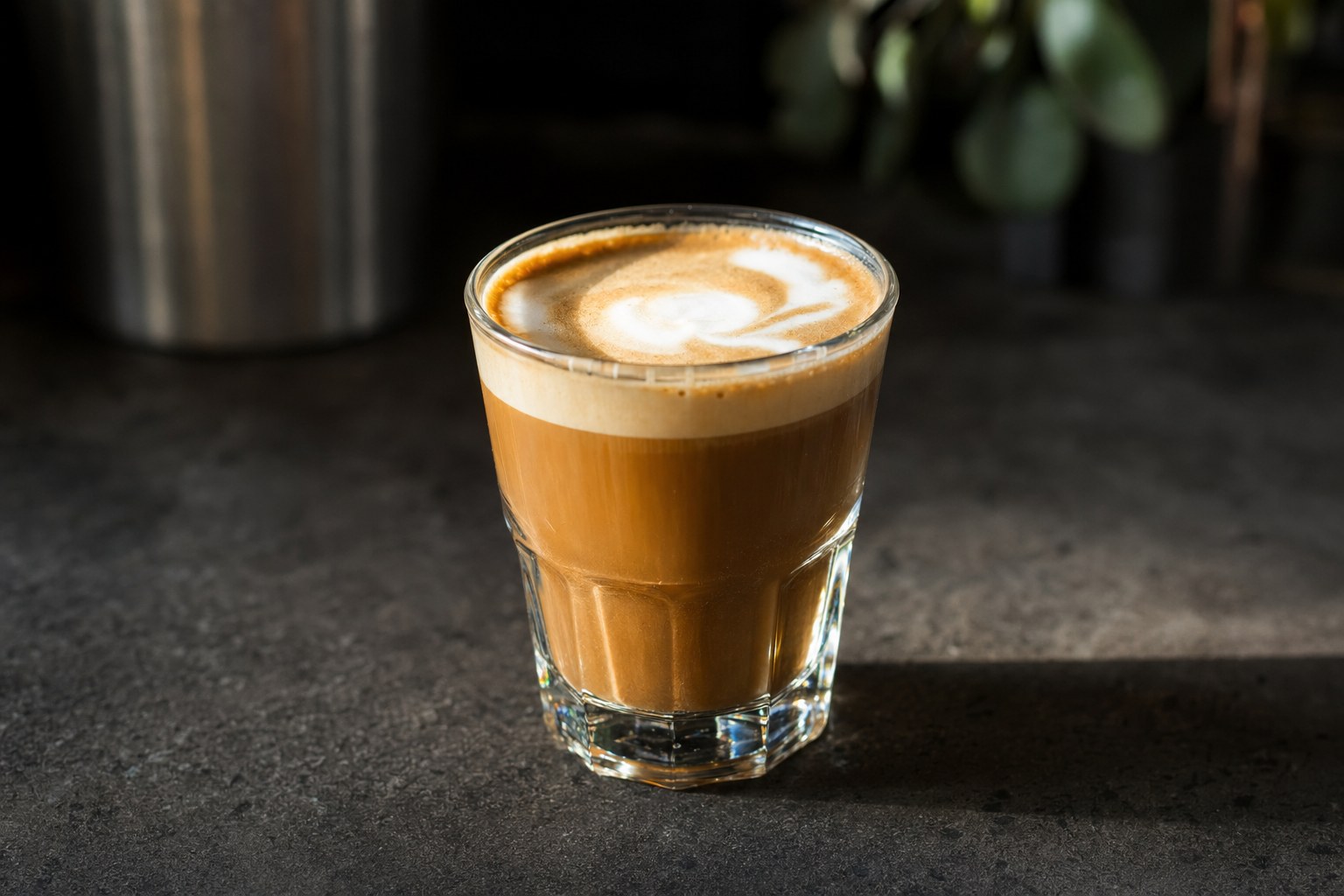
A cortado in a Gibraltar glass — 2 oz espresso, 2 oz steamed milk, nothing else.
Black coffee beyond espresso: drip, pour-over, French press, and the red eye
Not every coffee drink starts with espresso. The four most common black-coffee methods produce very different cups from the same beans, and the difference comes down to two things: how long the water sits on the grounds, and how the brew is filtered.
Drip coffee is the standard automatic-machine brew most American kitchens have run for decades. Water is heated, dripped through a paper filter holding medium-grind grounds, and collected in a carafe. It’s reliable and easy. The flavor is balanced and the paper strips out most of the oils, which gives you a cleaner cup.
Pour-over uses the same paper-filter principle but you control the pour by hand. The Hario V60 ($35) is the home standard: a conical dripper with spiral ridges and a single large hole. You wet the grounds, let them bloom for 30 seconds, then pour in slow concentric circles — our step-by-step pour-over guide walks through the full V60 method. The result is bright, clean, and almost tea-like in clarity. We reach for the V60 on weekend mornings when we’re not in a rush.
French press is the opposite philosophy. Coarse-ground coffee steeps in hot water for four minutes, then a metal mesh plunger pushes the grounds to the bottom. No paper filter means the oils stay in the cup, which gives you a heavier, richer brew with more body. The Bodum Chambord ($44) is the iconic version, and our guide to how to use a French press covers the technique start to finish. It’s almost impossible to mess up if you nail the grind size, which is why we recommend pairing any of these methods with a Baratza Encore ($149.95). Pre-ground coffee is the silent killer of every brew method on this list.
We go deeper on the Moka Express vs. French press tradeoff in our Moka Pot vs. French Press comparison.
A red eye is the wild card: a regular cup of drip with a shot of espresso added. Some shops call it a “shot in the dark.” It’s exactly what it sounds like and exactly what you’d expect: caffeine-forward, no nuance, useful at 6 a.m.
Cold coffee drinks: cold brew, iced coffee, and the espresso tonic
We make cold brew every Sunday in summer and drink it through Wednesday. The difference between cold brew and iced coffee confuses almost everyone, so let’s start there: iced coffee is brewed hot and poured over ice, while cold brew is steeped in cold water for 14–18 hours and never sees heat. That changes everything about the flavor. Iced keeps the bright acidity of hot brewing. Cold brew loses most of that acid in exchange for a smoother, slightly sweeter, fuller-bodied cup. They’re different drinks, not interchangeable.
The home cold-brew playbook is short. Use a 1:8 coffee-to-water ratio: 60 grams of coarse-ground beans to 480 grams of cold filtered water. Combine in a quart-size mason jar, stir, lid on, fridge for 14–18 hours. Strain through a paper filter (a coffee filter inside a fine-mesh sieve works) into a clean jar. What you have is concentrate. Dilute it 1:1 with water or milk when you serve. It keeps in the fridge for two weeks. Counter Culture publishes the same ratio if you want to cross-check.
Iced lattes and iced Americanos are exactly what they sound like: pull the shot, pour over ice, add cold milk (latte) or cold water (Americano). The espresso dilutes itself slightly as it hits the ice, so we pull a touch heavy if we know it’s going cold.
The espresso tonic is the easy specialty drink that punches way above its difficulty level. Fill a glass with ice, pour in 6 oz of tonic water (we use Fever Tree), then float a double shot of espresso on top. The bubbles carry the bitter tonic and the espresso meets them halfway. It tastes like a cocktail and it’s the drink we serve when guests want “something different.”
Nitro cold brew is the exception we’d skip at home. It needs a nitrogen keg system to charge the coffee with gas, which is what gives it the cascading, beer-like texture. The equipment runs several hundred dollars and the result is barely distinguishable from regular cold brew once the head settles. Buy it at a shop, don’t build it in your kitchen.
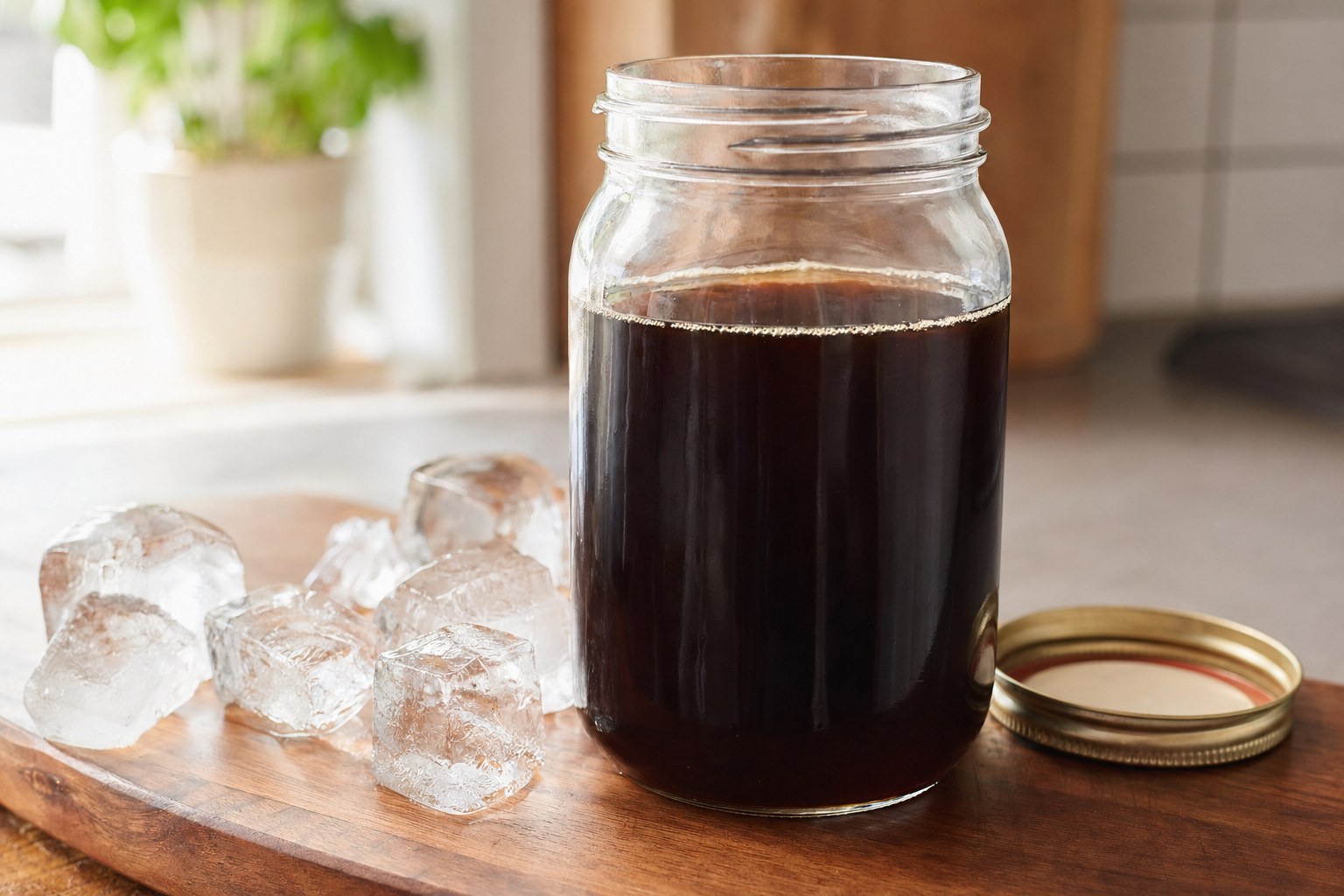
Cold brew concentrate made at home: 60 g coarse coffee, 480 g cold water, 14 hours in the fridge.
Specialty and world coffee drinks you can make at home
These are the drinks that look impressive on a menu and are quietly easy to make in your kitchen. We’ve worked all four into our regular rotation.
Affogato is the easiest dessert on Earth. Scoop one or two scoops of vanilla gelato into a small bowl or coupe glass. Pull a double shot of espresso. Pour the hot espresso directly over the gelato. That’s the whole recipe. The gelato melts into the shot and you eat it with a spoon. It’s our default move when we have espresso and ice cream in the house at the same time.
Turkish coffee needs a cezve (the small long-handled copper or brass pot, $15–25 on Amazon), a very fine grind that’s almost powder, and patience. Add cold water and the finely ground beans to the cezve in roughly equal proportions to your serving size, stir once, then heat slowly on the stove. As the foam rises, pull the pot off the heat before it boils over. Pour into a small cup and let the grounds settle for a minute before you sip. There’s no filter, so the grounds settle to the bottom and you stop drinking when you hit the sludge.
Vietnamese iced coffee (cà phê sữa đá) is built around dark roast or robusta brewed strong, traditionally through a phin filter ($8) that sits over the cup and drips slowly. If you don’t have a phin, a Bialetti Moka Express brewed strong does the job. While the coffee brews, put 2 tablespoons of sweetened condensed milk in the bottom of a tall glass. Pour the hot coffee over the condensed milk, stir until dissolved, then pour the whole thing over a glass full of ice. The condensed milk does double duty as both sweetener and dairy.
Irish coffee is the cold-night version. Heat a heavy mug, fill it three-quarters with hot strong coffee (we use a French press for this), stir in 1 teaspoon of brown sugar until dissolved, add 1.5 oz of Irish whiskey, and float lightly whipped cold heavy cream on top by pouring it over the back of a spoon. Don’t stir. You drink the hot coffee through the cold cream, which is the entire point.
What you actually need to make espresso drinks without an espresso machine
Here’s the honest answer to the question we get asked the most. Yes, you can make legitimately good lattes and cappuccinos without an espresso machine. A Bialetti Moka Express ($59.99) plus a handheld milk frother (around $15) gets you 80% of the way there for less than a tenth of the price. We used that exact setup for two years before we bought the Bambino, and nobody at the breakfast table ever complained.
The AeroPress ($39.95) is the other strong substitute. It produces a cleaner, less bitter concentrate than the Moka Express because the brew time is shorter and you control the pressure with the plunger. The catch is volume. A single press makes about 8 oz of diluted coffee or 2 oz of concentrate, so it’s a one-cup-at-a-time tool.
Neither makes true espresso. True espresso requires 9 bars of pressure, which is what produces crema and the dense, syrupy mouthfeel. The Moka Express runs at 1–2 bar. The AeroPress runs at less than 1 bar. If you want real espresso flavor, real crema, and the ability to steam microfoam for latte art, that’s when the Breville Bambino ($249.95) earns its price.
- Roughly $60 vs. $250+ for an entry-level espresso machine
- Stovetop operation, no electricity required (great for camping)
- Makes coffee bold enough to stand up in milk drinks
- Aluminum body lasts decades with basic care
- Forgiving once you learn your stove's heat profile
- Brews at 1–2 bar, so it is not true 9-bar espresso
- No crema layer on top
- No steam wand means no microfoam and no real latte art
- Flavor profile is darker and more bitter than machine espresso
- Stovetop heat control is harder than dialing in a machine
Frequently Asked Questions
What's the difference between a latte and a flat white?
The flat white is smaller and more espresso-forward. A latte is 8–12 oz total with 1.5–2 oz of espresso and 6–10 oz of milk topped with about 0.2 inches of microfoam, which makes it creamy and mild. A flat white is 5–6 oz total with 2 oz of espresso (often a double ristretto) and just 3–4 oz of milk with the same tight microfoam. Less milk per ounce of espresso means the coffee taste comes through more.
Can I make espresso drinks without an espresso machine?
Yes. A Bialetti Moka Express ($59.99) plus a handheld milk frother ($15) makes legitimate lattes and cappuccinos. The AeroPress ($39.95) is another strong substitute that produces a cleaner concentrate. Neither makes true 9-bar espresso, so you won't get real crema or pourable microfoam, but the flavor in milk drinks is genuinely good. We made all our home espresso drinks this way for two years before upgrading to a real machine.
What is microfoam and how is it different from regular foam?
Microfoam is steamed milk with bubbles so fine they're nearly invisible, with the texture of wet paint. It's what makes latte art possible. You get microfoam from a steam wand on an espresso machine. Regular (airy) foam is the thick, dry, distinct foam layer you get from a handheld frother or the foam attachment on a drip machine. Airy foam works fine for cappuccinos, where you want a separate foam cap, but it cannot pour into a heart or rosetta.
What's the strongest coffee drink?
By caffeine, a ristretto packs the highest concentration per ounce because it uses a full 18-gram coffee dose extracted into just 0.5–0.75 oz of liquid. A red eye (drip coffee plus an espresso shot) wins on total caffeine per serving because it stacks two brewing methods. By flavor intensity, Turkish coffee is the most concentrated style most people will ever try, since the powder-fine grounds stay in the cup the entire time you drink it.
How is cold brew different from iced coffee?
Iced coffee is brewed hot, then poured over ice, which keeps the bright acidity of hot brewing. Cold brew is steeped in cold water for 14–18 hours, never touches heat, and the slow extraction pulls less acid and more sweetness. Cold brew is also typically brewed as a 1:8 concentrate (60 g coffee to 480 g water) and diluted before serving. Iced coffee is ready to drink as soon as it cools.
What is a cortado?
A cortado is a Spanish drink: 2 oz of espresso cut with 2 oz of lightly steamed milk, served in a 4 oz Gibraltar glass. The name comes from the Spanish verb cortar, "to cut," because the milk cuts the bite of the espresso without burying it. In the United States cafés often call it a Gibraltar (the glass), in Australia a piccolo, and in France a noisette. We make cortados when we want the espresso to be the point.
What is a macchiato vs. a latte?
A macchiato is mostly espresso. It's 1–1.5 oz of espresso with just 1–2 tablespoons of foam on top, a 1.5–2.5 oz drink total. The Italian word macchiato means "stained," because the foam stains the espresso. A latte is the opposite: 1.5–2 oz of espresso buried in 6–10 oz of steamed milk and a thin layer of microfoam, served in an 8–12 oz cup. A Starbucks caramel macchiato is a sweetened latte, not a true macchiato.