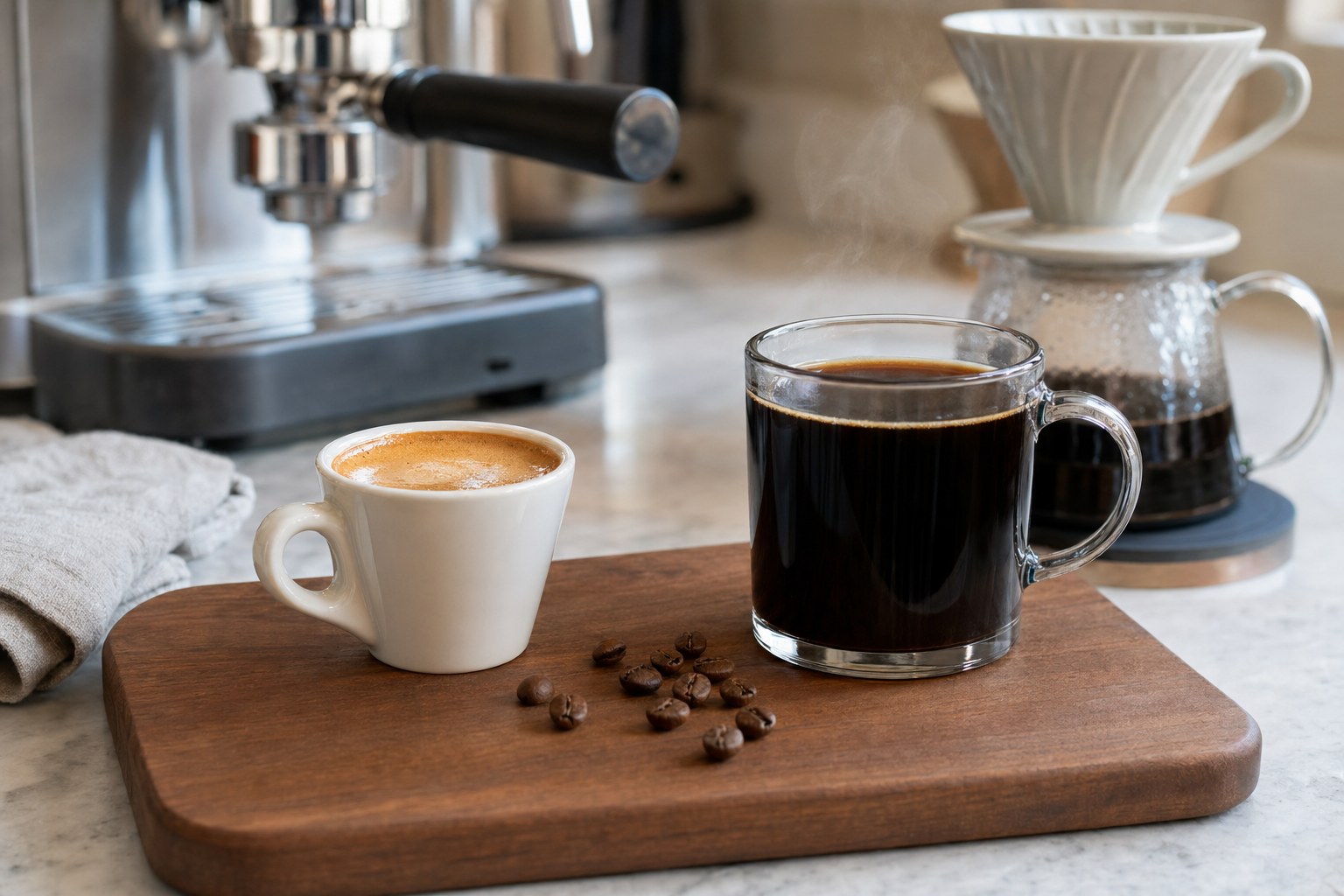
Espresso and regular coffee come from the same beans, but they’re different drinks. Different brewing pressure, different grind, different caffeine math, different cup-in-hand experience. This guide settles the comparison with the actual numbers, the brewing science, and a clear pick by use case.
Espresso has more caffeine per ounce; drip coffee has more total caffeine per serving. A 1 oz espresso shot delivers about 63 mg of caffeine. An 8 oz cup of drip coffee delivers about 95 mg. A 12 oz cup of drip delivers about 130 mg. The brewing methods are fundamentally different: espresso forces hot water through finely ground coffee at 9 bars of pressure for 25-30 seconds; drip coffee passes water through coarser grounds by gravity for 4-5 minutes. The result is concentration vs volume — espresso gives you a 30-second jolt in 1-3 oz; drip gives you a 20-minute sip with a higher total dose. They use different roasts (espresso is darker), different grinds (espresso is much finer), and produce different mouthfeel (espresso has crema, drip is clean and thin). Same plant, two different drinks.
The numbers, side by side
The fastest way to settle the comparison is the actual brewing parameters and the caffeine math. Every value below is from manufacturer or specialty-coffee published recipes.
| Factor | Espresso | Drip coffee |
|---|---|---|
| Typical serving | 1 oz (single shot) or 2 oz (double) | 8-12 oz cup |
| Caffeine per oz | ~40 mg | ~10-12 mg |
| Caffeine per typical serving | 63-65 mg (single), 126-130 mg (double) | 95 mg (8 oz), 130-140 mg (12 oz) |
| Brew pressure | 9 bars (130 psi) | 0 bars (gravity only) |
| Brew time | 25-30 seconds | 4-5 minutes |
| Water temperature | 200-205°F (93-96°C) | 195-205°F (90-96°C) |
| Grind size | Very fine, like powdered sugar | Medium, like coarse sand |
| Coffee dose | 7-9 g per shot, 14-18 g per double | 15-22 g per 8 oz cup |
| Brew ratio | 1:2 (puck weight to liquid out) | 1:15 to 1:17 |
| Roast level | Usually dark or medium-dark | Light, medium, or dark |
| Crema | Yes, golden foam on top | No |
| Equipment cost | $300-2000+ for home espresso machine | $25-300 for drip machine or pour-over kit |
The most-asked question, which has more caffeine, is a trick question. Per ounce, espresso wins by 4x. Per serving most people actually drink, drip coffee wins by 30-50%. The right answer depends on whether you mean a 1 oz shot or a 12 oz to-go cup.
Brewing: pressure changes everything
The defining difference is 9 bars of pressure. That’s about 130 psi, roughly the pressure inside a competitive bicycle tire. An espresso machine pumps water at that pressure through a tightly packed puck of finely ground coffee in 25-30 seconds. The pressure forces oils and dissolved solids out of the grounds that gravity-fed brewing leaves behind, which is why espresso has crema (the golden-brown foam) and a thick, concentrated body.
Drip coffee, whether it’s a Mr. Coffee, a Hario V60 pour-over, a Chemex, or a Kalita Wave, uses gravity. Hot water passes through coarser grounds in 4-5 minutes. No pressure means no crema, no oil-extraction, and a thinner cup with cleaner flavor.
You can’t shortcut from one to the other. A drip machine can’t make espresso because it has no pump. An espresso machine can’t make drip-style coffee because the puck would over-extract instantly. The Moka pot and AeroPress sit between the two. They generate some pressure (1-2 bars for the Moka, manual for the AeroPress) but not the 9 bars needed for true espresso. They make a concentrated coffee, not espresso. For more on the moka pot’s place in this hierarchy, see our moka pot vs French press comparison.
Caffeine: dose vs delivery
Most caffeine comparisons compare the wrong things. The fair comparison isn’t “1 oz vs 1 oz” or “1 cup vs 1 cup”. It’s how each drink is normally consumed.
A typical day for an espresso drinker: one or two singles or doubles, sometimes spaced apart, sometimes pulled in one drink (a Americano, a flat white, a cortado). Total caffeine: roughly 60-260 mg.
A typical day for a drip coffee drinker: one to three 8-12 oz cups, often sipped over 20-30 minutes each. Total caffeine: roughly 95-400 mg.
The drip drinker usually consumes more total caffeine in a session because the volume invites it. The espresso drinker takes the dose faster but in less liquid. For deeper detail on espresso caffeine specifically, including how grind, dose, and roast change the number, see our How Much Caffeine Is in a Shot of Espresso breakdown.
The FDA’s caffeine guidance is up to 400 mg per day for healthy adults. That’s roughly 6 single shots, 4 doubles, 4 cups of 8 oz drip, or 3 cups of 12 oz drip. Both drinks fit comfortably inside that ceiling at normal consumption.
Taste: concentration vs balance
Espresso is intense. Thick body, syrupy mouthfeel, crema on top, flavors that lean toward chocolate, caramel, and roasted nut from the darker roasts most espresso blends use. The shorter brew time (25-30 seconds) and high pressure pull a different chemical fingerprint than drip: more lipids, more dissolved solids, less water dilution. A well-pulled shot finishes sweet and lingers on the palate.
Drip coffee is balanced. Lighter body, cleaner finish, more upfront acidity (especially with light roasts), and flavors that range from bright citrus and floral to deep chocolate depending on origin and roast. The longer 4-5 minute brew time pulls out a wider range of compounds at lower concentration. A pour-over from a single-origin Ethiopian bean will taste fruity and tea-like in a way no espresso can replicate.
This is why the same beans produce noticeably different cups in the two methods. An espresso machine is a magnifier. It intensifies whatever is in the bean. Drip coffee is a translator. It gives a cleaner read on the bean’s natural character.
When to choose each
For a fast caffeine hit and intense flavor in 30 seconds, espresso wins. For all-day sipping, more total caffeine, and the option to taste a single-origin bean's natural character, drip coffee wins. Most home coffee setups eventually have both. If you can only have one, drip coffee covers more daily-driver scenarios; if budget allows, an espresso setup unlocks a different category of drinks (lattes, cappuccinos, Americanos) that drip coffee can't make.
See our brewing methods guideThere’s no need to pick a side permanently. Most home coffee drinkers cycle between methods depending on the morning. Espresso for the rushed weekday, drip or pour-over for the slow weekend.
For more on choosing a brewing method that fits your budget and routine, the Brewing Methods hub lays out every major option, and the Pour Over Coffee Ratio guide covers the home-friendly version of high-control coffee that doesn’t require a $1,000 espresso machine. If you’re trying to decode every coffee-shop drink built on these two bases, our Types of Coffee Drinks guide maps espresso-based and drip-based drinks side by side.
Frequently Asked Questions
Does espresso have more caffeine than coffee?
Per ounce, yes. Espresso runs about 40 mg of caffeine per ounce versus 10-12 mg per ounce for drip coffee. But people drink coffee in bigger servings, so the totals flip. A single 1 oz espresso shot has about 63-65 mg of caffeine. An 8 oz cup of drip coffee has 80-100 mg. A 12 oz cup of drip has 120-140 mg. Espresso is the more concentrated dose; drip coffee delivers more total caffeine per typical serving.
Is espresso just stronger coffee?
No. Espresso is brewed differently from regular coffee. It uses 9 bars of pressure to force hot water through a tightly packed puck of finely ground coffee in 25-30 seconds. Drip coffee uses gravity and takes 4-5 minutes. The pressure brewing extracts oils that produce crema (the golden foam on top) and a thicker, more concentrated cup. You can't make true espresso in a drip machine. Pressure is the missing ingredient.
Can you use regular coffee beans for espresso?
Technically yes, but the result depends on the roast. Light or medium roasts can produce a bright, sour shot because the higher acidity isn't masked by roast bitterness. Darker roasts work better in espresso because they extract more evenly under pressure. Most espresso blends are roasted darker than drip blends for that reason. If you only have one bag of beans, grind it espresso-fine and pull a shot. Just expect a different flavor profile than a coffee labeled 'espresso roast.'
Which has more antioxidants, espresso or coffee?
Per ounce, espresso has more antioxidants. Per typical serving, an 8 oz cup of drip coffee has more total antioxidants because the volume is larger. Both deliver chlorogenic acids and polyphenols. The brewing method matters less than the bean and roast. Lighter roasts retain slightly more chlorogenic acids than darker roasts.
How many shots of espresso equal a cup of coffee?
On caffeine alone, about 1.5 shots of espresso (95 mg) match an 8 oz cup of drip coffee (95 mg). For a 12 oz cup of drip (about 130 mg), 2 shots of espresso are roughly equal. But the experience is different. Espresso delivers caffeine in 30 seconds in 1-3 oz of liquid; drip coffee spreads it over 20-30 minutes of sipping 8-12 oz. Same dose, different curve.
Is espresso healthier than regular coffee?
Both are similarly healthy. Espresso has slightly more concentrated antioxidants per ounce; drip coffee has more total antioxidants per serving. Espresso's smaller volume means less water consumed alongside, which matters for hydration. Both contribute to the FDA's 400 mg daily caffeine ceiling for healthy adults. The bigger health variable is what you add (sugar, syrups, full-fat dairy) rather than which brew method delivers the caffeine.
Why does espresso taste different from coffee?
Three reasons. First, the high-pressure extraction pulls more oils and dissolved solids out of the grounds, giving espresso its thick body and crema. Second, the contact time is short (25-30 seconds), so different flavor compounds extract than in a 4-minute drip. Third, espresso roasts are usually darker, which masks acidity and emphasizes chocolate, caramel, and nut notes. Drip coffee from the same beans tastes brighter, lighter-bodied, and more tea-like.
Can you drink espresso every day?
Yes, in moderation. The FDA's caffeine guidance is up to 400 mg per day for healthy adults, which is about 6 single shots or 4 doubles. Most daily espresso drinkers stop at 2-4 shots a day. The acidity of espresso can irritate sensitive stomachs more than drip. If that's an issue, switch to a darker roast or pull shots a few seconds shorter to reduce the more acidic compounds in the cup.