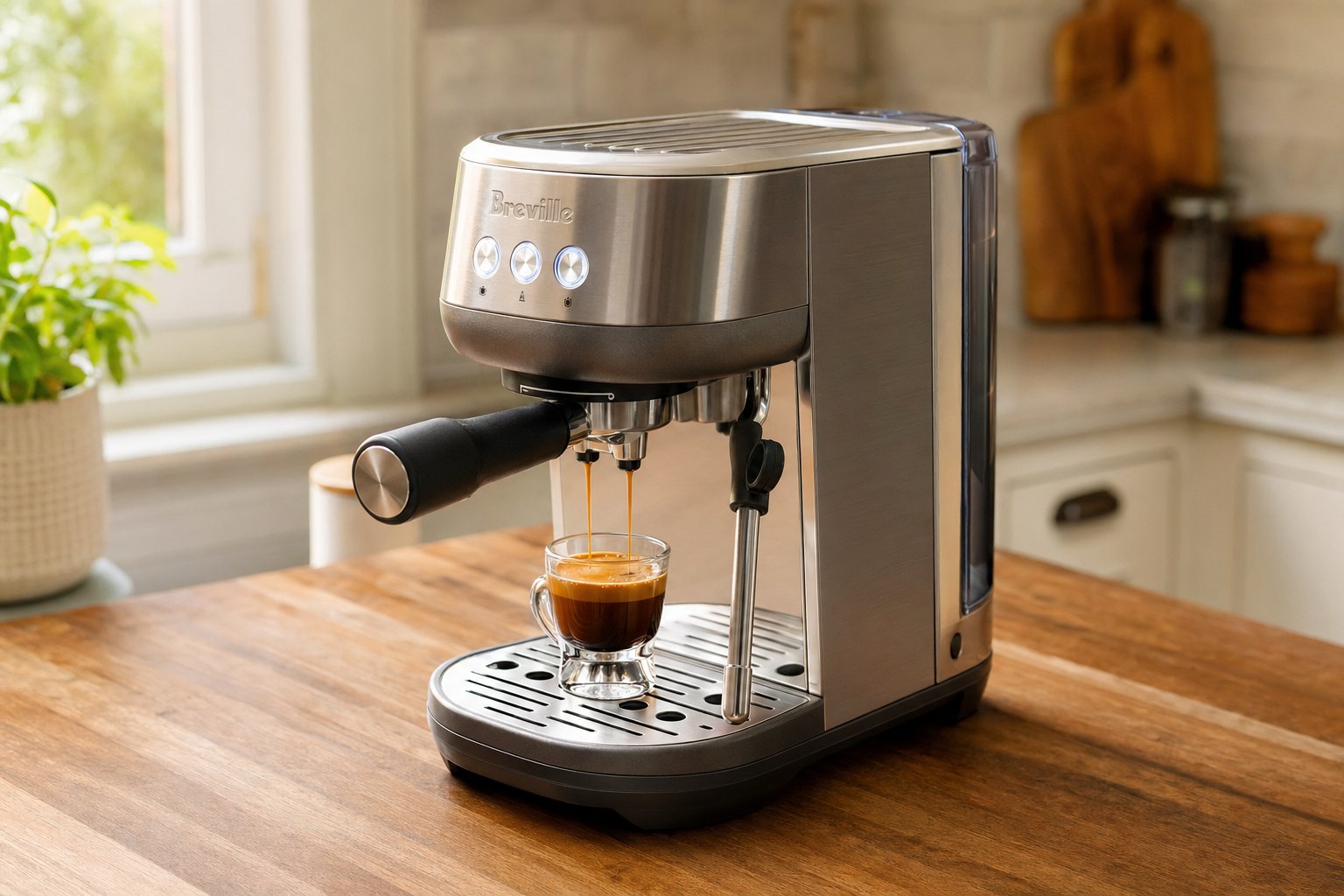
The USDA pegs a 1 oz espresso shot at 63 mg of caffeine. That number is a useful baseline and a near-useless prediction. We pulled shots on a Breville Bambino paired with a Baratza Encore, varied dose from 7g to 20g, dialed yield by weight, and timed every pour. Our home-tested range came in at 47 to 130 mg per shot, which lines up with the published commercial range of 25 to 214 mg. Single, double, ristretto, lungo, light roast, dark roast, arabica, robusta: every one of them moves the number. Here is what actually moves it.
A single standard espresso shot holds about 63 mg of caffeine (USDA baseline), but your actual shot likely lands between 47 and 130 mg depending on dose, yield, and bean type. A traditional double pulled at 18g in, 36g out hits roughly 90 to 130 mg. A Starbucks double is bigger by design: they dose around 20g and publish 150 mg per double. Ristretto shots run 60 to 70 mg because they use the same 7 to 9g dose as a single. Lungos hit 80 to 90 mg because longer extraction pulls a bit more caffeine from the same puck. The dominant variable is dose, the dry weight of coffee in the basket. We confirmed this on a Bambino with a Baratza Encore: hold everything else constant, change only the dose, and total caffeine moves almost linearly with grams in.
The numbers: single, double, ristretto, lungo
A 1 oz pour can hold 47 mg or 65 mg depending on what went into the basket. Volume alone tells you almost nothing. Here is the side-by-side that does.
| Shot Type | Volume | Dose Used | Caffeine (mg) |
|---|---|---|---|
| Single (standard) | 1 oz / 30 mL | 7–9g | 47–65 mg |
| Double (traditional) | 2 oz / 60 mL | 14–18g | 90–130 mg |
| Double (Starbucks) | 2 oz / 60 mL | ~20g | 150 mg |
| Ristretto | 0.5 oz / 15 mL | 7–9g | 60–70 mg |
| Lungo | 2–3 oz / 60–90 mL | 7–9g | 80–90 mg |
| Decaf (single) | 1 oz / 30 mL | 7–9g | 3–15 mg |
Two things stand out once you stop reading the volume column. Ristretto is not weaker than a single. It uses the same dose and extracts most of the caffeine in the early phase of the pour, so it lands in the same neighborhood despite serving half the liquid. The traditional double at 18g is the home standard for a reason: it sits in the 90 to 130 mg sweet spot most cafe drinks are built around. We pulled 18g in, 36g out repeatedly on the Bambino and came in around 110 mg by the math, which matches the body and crash a 12 oz latte gives us. Starbucks is the chain outlier. Their published number for a doppio is 150 mg, which fits a roughly 20g dose, heavier than what most third-wave cafes use. That extra 2 grams is part of why their espresso drinks hit harder than the cup size suggests.
Why one shot can be 25 mg and another can be 214 mg
The caffeine range you see quoted in commercial espresso is not measurement error. It is real, and one variable explains almost all of it.
In 2007, an Australian research team measured caffeine in 97 commercial espresso shots collected from five Sydney shopping centers. The shots ranged from 25 mg to 214 mg per serve. That is almost a 9x spread for a drink that ostensibly follows the same recipe everywhere. When the researchers ran the regression, one factor explained 87 to 96% of the variance: how much ground coffee was packed into the portafilter. Not extraction time. Not water temperature. Not tamp pressure. Dose.
A 2023 study from the Technical University of Munich went the other direction. Researchers held dose constant and varied flow rate and grind size across many double shots to see how far extraction conditions could move caffeine output. The answer was barely. Caffeine totals stayed in a narrow band of 172.9 to 195.2 mg across every condition tested. The team noted that caffeine extraction is “only slightly influenced” by flow rate and grind size, while flavor compounds (acids, sugars, melanoidins) vary dramatically with the same changes.
Put the two studies together and the hierarchy is clear. Dose first. Yield second. Bean type third. Extraction time, water temperature, tamp pressure, and grind setting are real levers for flavor and almost irrelevant for caffeine. If a barista doses 7g for your single and the next cafe doses 12g, you are drinking nearly twice the caffeine in the second cup before any other variable enters the picture. That is also why “had one espresso and felt nothing” and “had one espresso and was wired for four hours” can both be true descriptions of the same nominal drink.
How to control the caffeine in your home shot
Knowing the levers is easy. Pulling shots that actually hit the same number twice in a row takes a scale and a small amount of discipline.
Step 1. Weigh your dose. Volume scoops are how you end up with a 25 mg shot one morning and a 130 mg shot the next. We use an Acaia Pearl on the drip tray and weigh into the portafilter every time. The numbers worth memorizing: 9g for a traditional single, 18g for a modern double. We keep the Baratza Encore on setting 12 for the Bambino, which produces a grind fine enough to hit our target shot time without choking the machine.
Step 2. Set your yield by weight, not volume. Espresso yield is the weight of liquid in the cup, not the milliliters. A 1:2 ratio means 18g in, 36g out. Use a Hario SGS-80 shot glass as a volume sanity check (it is graduated at 20, 40, and 60 mL), but trust the scale for the actual number. Counterintuitively, more yield equals more total caffeine in the cup, even though the drink is less concentrated per ounce. A lungo pulled to 60g of liquid extracts more caffeine from the same 9g puck than a 30g single does.
Step 3. Factor in your bean type. Caffeine content is a property of the bean, not the roast. Arabica runs about 1.2 to 1.5% caffeine by dry weight. Robusta runs 1.7 to 3.5%, roughly twice as much. Most specialty cafes pour 100% arabica. Italian-style commercial blends often include 10 to 30% robusta for crema and body, which also drags the caffeine number up. A robusta-heavy blend at the same 18g dose delivers significantly more caffeine than a single-origin arabica.
Step 4. Do the math. Worked example: 18g of arabica at 1.4% caffeine by weight equals 252 mg of caffeine in the puck. Espresso extraction efficiency for caffeine sits around 90 to 95%, so the cup gets about 225 to 240 mg. That is the double. A 9g single lands at roughly half. Switch to a 30% robusta blend and the same 18g dose puts you closer to 290 mg in the cup. The math is not exact, but it is close enough to predict whether your 4 PM shot is going to wreck your sleep.
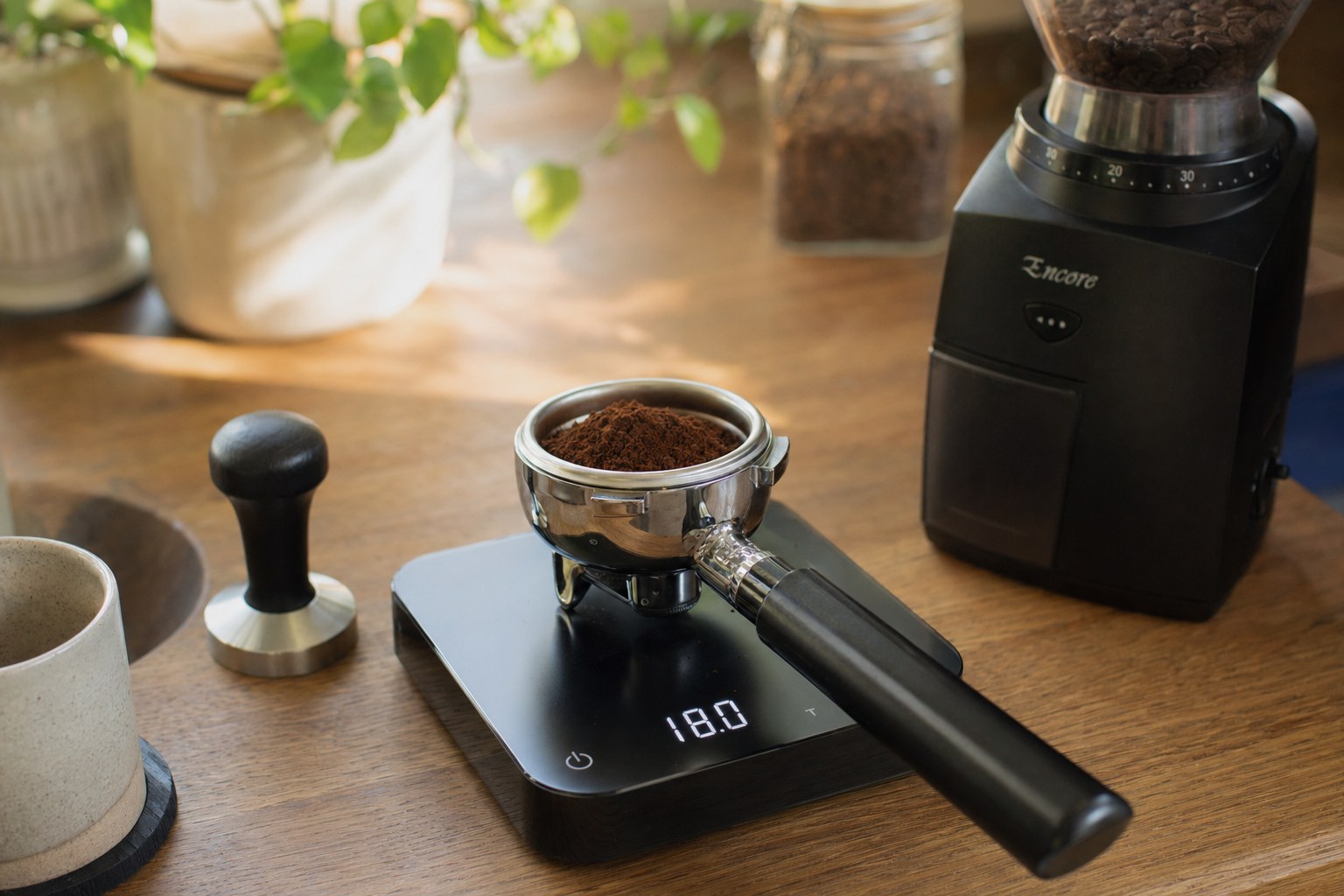
Weighing the dose before every shot is the single biggest lever for controlling how much caffeine ends up in your cup.
Espresso vs. drip: the per-serving paradox
Espresso is the most concentrated common coffee drink. A single shot delivers roughly 63 mg in 1 oz of liquid, which works out to about 63 mg per ounce. Drip coffee runs about 12 mg per ounce. By concentration, espresso wins by a factor of five. By total caffeine per typical serving, drip coffee wins. An 8 oz mug of drip lands around 95 mg. A single shot lands around 63 mg. The drink that feels stronger is not the drink that delivers more caffeine.
This is the source of more bad coffee math than almost any other misconception. Readers assume “stronger” means “more caffeine” because espresso tastes more intense and hits faster. Both are true; neither implies a higher total dose. A double shot does close the gap and pass drip on total caffeine. A single does not.
- High caffeine concentration per ounce (~63 mg/oz vs ~12 mg/oz for drip)
- Fast delivery from a small, highly bioavailable volume
- Predictable if you weigh dose and yield
- Scales easily by pulling a double for 2x caffeine
- Single shot has less total caffeine than a full mug of drip coffee
- Home shots vary widely if you don't weigh inputs
- Easy to confuse concentration with total caffeine
- Higher cost per gram of coffee vs drip
If you want a fuller picture of where each brew method lands on the caffeine spectrum, our moka pot and French press caffeine comparison walks through immersion vs pressure brewing and how the numbers shake out for a typical home setup. For broader context on dose, yield, and extraction across every common method, our brew ratio guide covers the underlying numbers.
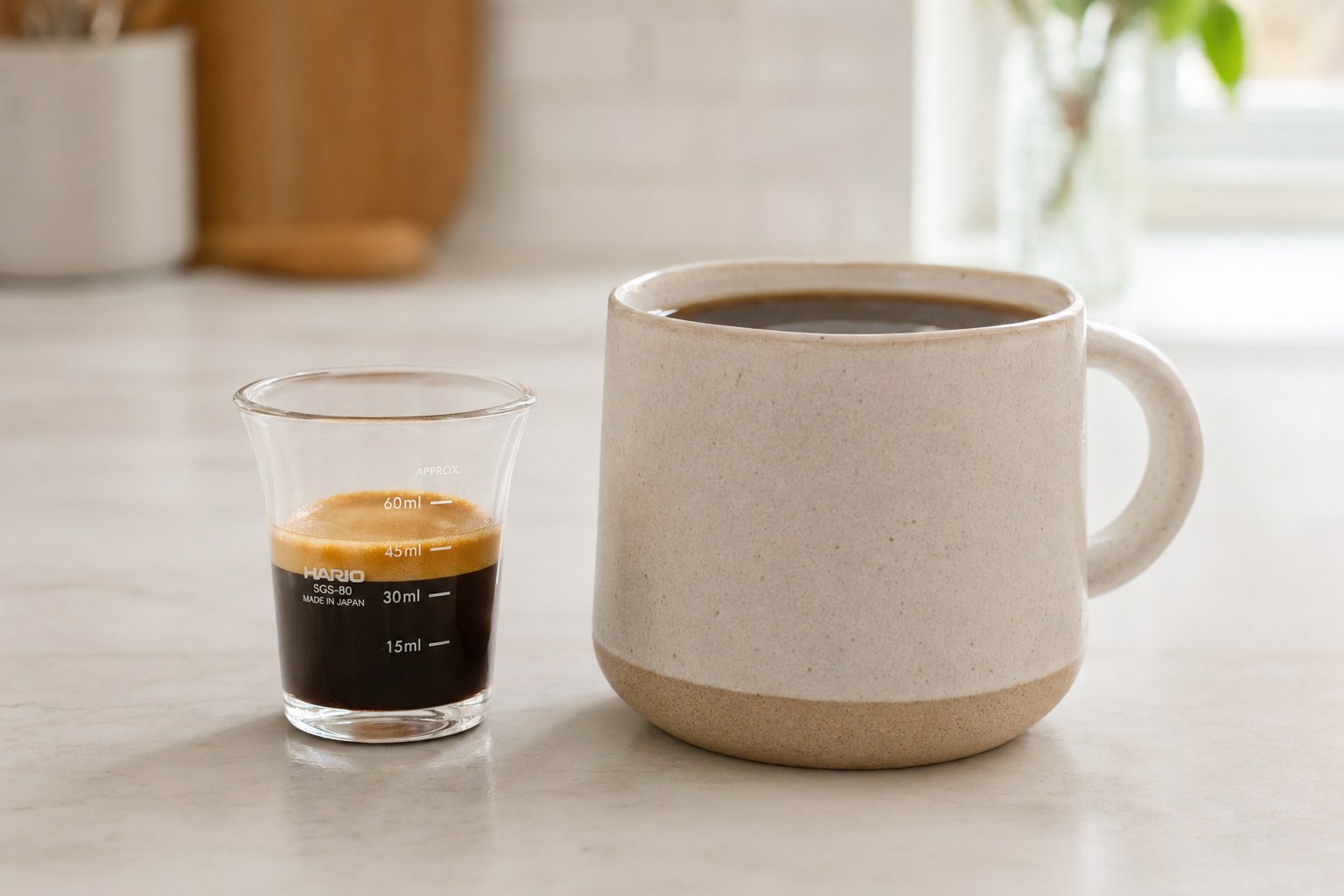
One shot vs. one mug: the espresso is more concentrated, but the drip wins on total caffeine per serving.
Does roast level or bean type matter?
Roast level matters less than coffee Twitter would have you believe. The dark-vs-light caffeine difference is small when you weigh by grams. What confuses the issue is density. Dark roast beans lose more water and CO2 during roasting, so they weigh less per bean. Measure by scoop or tablespoon instead of by scale and you get fewer grams of dark roast in the same volume, and therefore less caffeine in the cup. Weighed properly, light and dark roasts of the same bean land within a few percent of each other. Boldness of flavor is not a proxy for caffeine.
Bean type is the real lever, and it is a big one. Arabica is the default for specialty coffee at roughly 1.2 to 1.5% caffeine by dry weight. Robusta sits at 1.7 to 3.5%, often double or more. Third-wave cafes typically pour 100% arabica shots. Traditional Italian-style blends (Lavazza, illy, classic neighborhood-bar blends) frequently include 10 to 30% robusta for crema density, body, and a heavier mouthfeel, and that robusta percentage is also doing real work on the caffeine number. Switch from a single-origin Ethiopian arabica to a robusta-blend Italian espresso at the same dose and your shot’s caffeine swings 40 to 60%.
Pick your bean, weigh your dose, set your yield. That is the whole game.
Frequently Asked Questions
How many shots of espresso is safe per day?
The FDA guidance for healthy adults is up to 400 mg of caffeine per day, which works out to roughly 4 to 6 single espresso shots or 3 to 4 doubles, depending on dose. Pregnant women are typically advised to stay under 200 mg. Tolerance, sleep schedule, and any existing heart or anxiety conditions should pull that number down. Caffeine sensitivity also varies widely between individuals based on a liver enzyme called CYP1A2.
Does a Starbucks double shot have more caffeine than a home shot?
Usually yes. Starbucks publishes 150 mg of caffeine per double shot, which corresponds to roughly a 20g dose, heavier than the 18g traditional double most home setups pull. A typical home double at 18g in, 36g out lands closer to 90 to 130 mg. So a Starbucks doppio runs 15 to 60 mg higher than a comparable home shot at the same volume. The cup looks identical. The dose is not.
Does decaf espresso have any caffeine?
Yes, but very little. Decaffeination is not zero-caffeine. Most processes (Swiss Water, CO2, methylene chloride) remove 97 to 99% of caffeine. A single decaf espresso shot typically contains 3 to 15 mg, depending on the bean and the decaf method used. That is roughly one-fifth the caffeine of a half-square of dark chocolate. Sensitive drinkers and pregnant drinkers can usually tolerate one or two decaf shots without measurable effect.
Is ristretto stronger than a regular espresso shot?
Stronger in flavor concentration, not in caffeine. A ristretto uses the same 7 to 9g dose as a single espresso but stops the pour earlier, around 15 mL instead of 30 mL. Caffeine extracts mostly in the first half of the pour, so you keep 60 to 70 mg of the original ~65 mg. The drink tastes more intense because the liquid is more concentrated, but you are not getting meaningfully more caffeine than a regular single.
Why does my home espresso feel weaker than coffee shop espresso?
Three likely reasons, all dose-related. Cafes often dose 18 to 20g for a double while home setups commonly pull 14 to 16g if you don't weigh in. Many commercial blends include 10 to 30% robusta, which roughly doubles caffeine per gram. And cafe machines hold more stable extraction temperatures, which improves yield consistency. Switch to a scale, target 18g for doubles, and try a robusta-blend espresso to close the gap.
How long does caffeine from espresso last?
Caffeine has a half-life of about 5 hours in most healthy adults, meaning half the dose is still circulating 5 hours after you drink it and a quarter is still active at 10 hours. A 110 mg double shot at noon leaves roughly 55 mg in your system at 5 PM and 27 mg at 10 PM. That residual caffeine is the main reason afternoon espresso disrupts sleep even when you don't feel wired anymore. Slow metabolizers (CYP1A2 variant) can have half-lives closer to 8 hours.