The most common belief about coffee roast is also the most wrong: that dark roast is stronger, bolder, and more caffeinated than light roast. The taste is bolder. The caffeine almost always isn’t. Both roasts start from the exact same green bean. Everything that separates a bright, lemony Ethiopian light roast from a smoky, chocolatey French roast happens inside the roaster, in the span of about 12 to 15 minutes and a few dozen degrees of heat. We compare the two on the four dimensions that actually matter when you’re standing in front of the bean shelf: flavor, caffeine, acidity and stomach impact, and which brew method each roast was built for.
Light roast rewards curiosity; dark roast rewards consistency.
Dark roast tastes bold because of caramelization and Maillard reactions, not because it has more caffeine. By volume, light roast actually has slightly more caffeine (about 60 mg per cup versus 51 mg for dark) because light beans are denser, so a tablespoon of light roast contains more bean mass than a tablespoon of dark. Light roast also carries roughly three times the chlorogenic acid (around 270 mg/L versus 90 mg/L for dark), which is why it tastes brighter and sharper.
Reach for dark roast if you have a sensitive stomach, prefer chocolate and caramel notes, or brew with a Bodum Chambord French press, Bialetti Moka Express, or espresso machine. Reach for light roast if you brew pour-over with the Hario V60 or an AeroPress and want to taste where the bean came from. Medium-dark is the safest starting point if you’re upgrading from grocery-store coffee.
At a glance: light vs. dark roast compared
Here is how the two roasts stack up across the dimensions that matter most for a home brewer.
| Feature | Light Roast | Dark Roast |
|---|---|---|
| Flavor profile | Fruity, floral, tea-like, origin-driven | Chocolate, caramel, smoky, roast-driven |
| Caffeine (by volume) | ~60 mg/cup (denser beans) | ~51 mg/cup |
| Perceived acidity | Higher (bright, sharp) | Lower (smooth) |
| Body | Lighter, tea-like | Fuller, heavier |
| Best brew method | Hario V60, AeroPress | Bodum Chambord, Bialetti Moka Express, espresso |
| Shelf life (post-roast) | 4–8 weeks | 2–4 weeks |
| Best for | Flavor-curious brewers | Beginners, sensitive stomachs |
Flavor: origin character vs. roast character
Take two bags of green coffee, one Ethiopian Yirgacheffe and one Colombian Huila. Roast both light and the cups taste like two different beverages. The Ethiopian light tastes like jasmine, lemon zest, and stone fruit. The Colombian light tastes like caramel, cocoa nib, and red apple. Now roast the same two beans to a French-roast finish and the cups converge: chocolate, walnut, and a curl of smoke. The bean’s origin is still in there somewhere, but the roast has buried it under caramelization and pyrolysis byproducts.
That convergence is the trade. As Italian roaster Davide Cobelli put it, “Roasting darker means losing quality. Too much heat will destroy acids, proteins, and sugars.” Translated for the home brewer: dark roast is a flavor created by the roaster. Light roast is a flavor created by the farm. Neither is objectively better. They are different products that happen to share a shelf.
- Preserves terroir and origin character: you taste the farm, not the roaster
- Higher chlorogenic acid and antioxidant content (~270 mg/L CGA vs ~90 mg/L for dark)
- Slightly longer shelf life because the denser bean structure slows oxidation
- More flavor complexity: fruity, floral, tea-like notes that dark roast erases
- Higher perceived acidity, which is rough on sensitive stomachs
- Unforgiving to brew: needs precise grind, near-boiling water, extended contact time
- Delicate flavors get overwhelmed by milk and sugar
- Hard to find quality light roast at most grocery stores
- Smooth and accessible: chocolate, caramel, low acidity, easy to like
- Gentler on sensitive stomachs because NMP content is roughly 3x higher (87 mg/L vs 29 mg/L)
- Easier to brew consistently: more porous, more soluble, more forgiving of grind error
- Holds its own in milk drinks like lattes and cappuccinos
- Suppresses origin character, so most dark roasts taste similar regardless of farm
- Lower antioxidant content because chlorogenic acid falls roughly 83% from green-bean levels
- Shorter shelf life: surface oils oxidize fast, peak window is 2–4 weeks
- Easy to push into bitterness or over-extraction if water is too hot
Caffeine: the number that surprises most people
The boldest-tasting coffee is not the most caffeinated coffee. Caffeine is a remarkably stable molecule with a melting point of 238°C, well above any roast profile a working roaster will ever run. The drum simply does not get hot enough, long enough, to break down meaningful amounts of caffeine. What changes during roasting is the bean itself.
Green coffee beans lose between 12% and 20% of their mass during roasting, mostly as water and CO2. Light-roasted beans lose less. Dark-roasted beans lose more, and because they puff up, they become less dense. That density difference is where the caffeine confusion comes from.
By weight, light roast and dark roast contain approximately the same caffeine. Same grams in, same caffeine out. By volume, light roast wins. A measuring tablespoon of light roast weighs noticeably more than a tablespoon of dark roast, because each light-roast bean is denser and heavier. A 2018 study measuring caffeine in equivalent volumetric samples found roughly 60 mg of caffeine in light roast versus 51 mg in dark roast.
There is a 2024 wrinkle worth knowing. A Scientific Reports study from researchers at Berry College and Drexel University found that the maximum caffeine in brewed coffee actually peaks at medium roast, around 14 to 16% mass loss during roasting, because medium roast hits a sweet spot between caffeine preservation and grounds solubility. Light roast keeps more caffeine in the bean, but a portion stays locked in the grounds. Medium roast extracts more efficiently.
The bottom line for a home brewer: if you scoop by volume, light roast wins on caffeine. If you weigh your grounds on a scale, it is essentially a tie. If you are chasing the maximum caffeine yield in your cup, medium roast may have a small edge. For espresso specifically, see how much caffeine is in a shot of espresso.
Acidity and your stomach: what the science says
First: is light roast more acidic than dark roast? Yes, by both perception and chemistry. Light roast carries about 270 mg/L of chlorogenic acid (CGA), medium lands around 187 mg/L, and dark roast falls to roughly 90 mg/L, an 83% reduction from the green bean. CGA is the dominant organic acid in coffee and the main driver of brightness on the palate. Light roast also has a slightly lower pH, around 4.9 versus 5.3 for dark, but the absolute pH gap is modest. All brewed coffee lands in the 4.85 to 5.10 range, which is roughly as acidic as a banana. So when people say light roast is “more acidic,” they are mostly responding to flavor brightness, not a dramatic difference in pH.
Second, and this is where the conventional wisdom collapses: which roast is easier on a sensitive stomach? The answer is dark roast, and the reason is a compound most people have never heard of. Dark roast contains roughly three times more N-methylpyridinium (NMP) than light roast: about 87 mg/L in dark roast versus 29 mg/L in a medium blend. NMP is created during the later stages of roasting and it down-regulates gastric acid secretion by impairing prosecretory factors in the parietal cells of the stomach lining.
A 2014 clinical study by Rubach and colleagues, published in Molecular Nutrition & Food Research, confirmed that dark roast coffee stimulates less gastric acid production than medium or light roast. If you have acid reflux, GERD, or a generally sensitive stomach, the science says reach for dark roast. The brightness of light roast may feel sharper on your tongue, but it is the NMP in dark roast that calms your stomach.
Brewing: the parameters that change everything
Light-roast beans are dense, dry, and less porous. Water has to work harder to pull flavor out of them. Dark-roast beans are puffed up, more porous, and dramatically more soluble. Water rips through them. Use light-roast parameters on a dark-roast bean and you over-extract: bitter, ashy, hollow. Use dark-roast parameters on a light-roast bean and you under-extract: sour, grassy, thin. The grinder, the water temperature, and the contact time are the dials, and they need to move when the bag changes.
Pour-over (Hario V60). Built for light roast. The paper filter strips out oils and clarifies the cup, letting the volatile aromatics from the origin come through clean. Use 93 to 100°C water, a medium-fine grind, and a 1:15 to 1:16 brew ratio. Bloom with 45g of water for 45 seconds, then pour in stages to a total brew time of 2.5 to 3.5 minutes.
French press (Bodum Chambord). Built for dark or medium-dark roast. The metal mesh filter lets the natural oils pass through into the cup, which amplifies the bold, chocolatey character that dark roast specializes in. Use 88 to 93°C water, a coarse grind, a 1:15 ratio, and a 4-minute steep before pressing.
Moka pot (Bialetti Moka Express). A classic dark-roast vehicle. Italian espresso culture runs almost entirely on dark or medium-dark roast, and the Bialetti Moka Express was designed inside that culture. You can brew light roast in a Moka pot, but the result is a sharp, sometimes startling cup that does not match what most people expect from stovetop espresso. Use a fine-ish grind, medium-low heat, and pull the pot off the stove the second you hear the gurgling start.
Cold brew. Medium-dark or dark is the traditional choice and produces the smooth, chocolatey concentrate most people associate with the style. Light-roast cold brew is also possible and produces unexpected fruity, tart, almost juice-like results. Not wrong, just different. Coarse grind, 1:8 ratio by weight, 14 to 18 hours in the fridge.
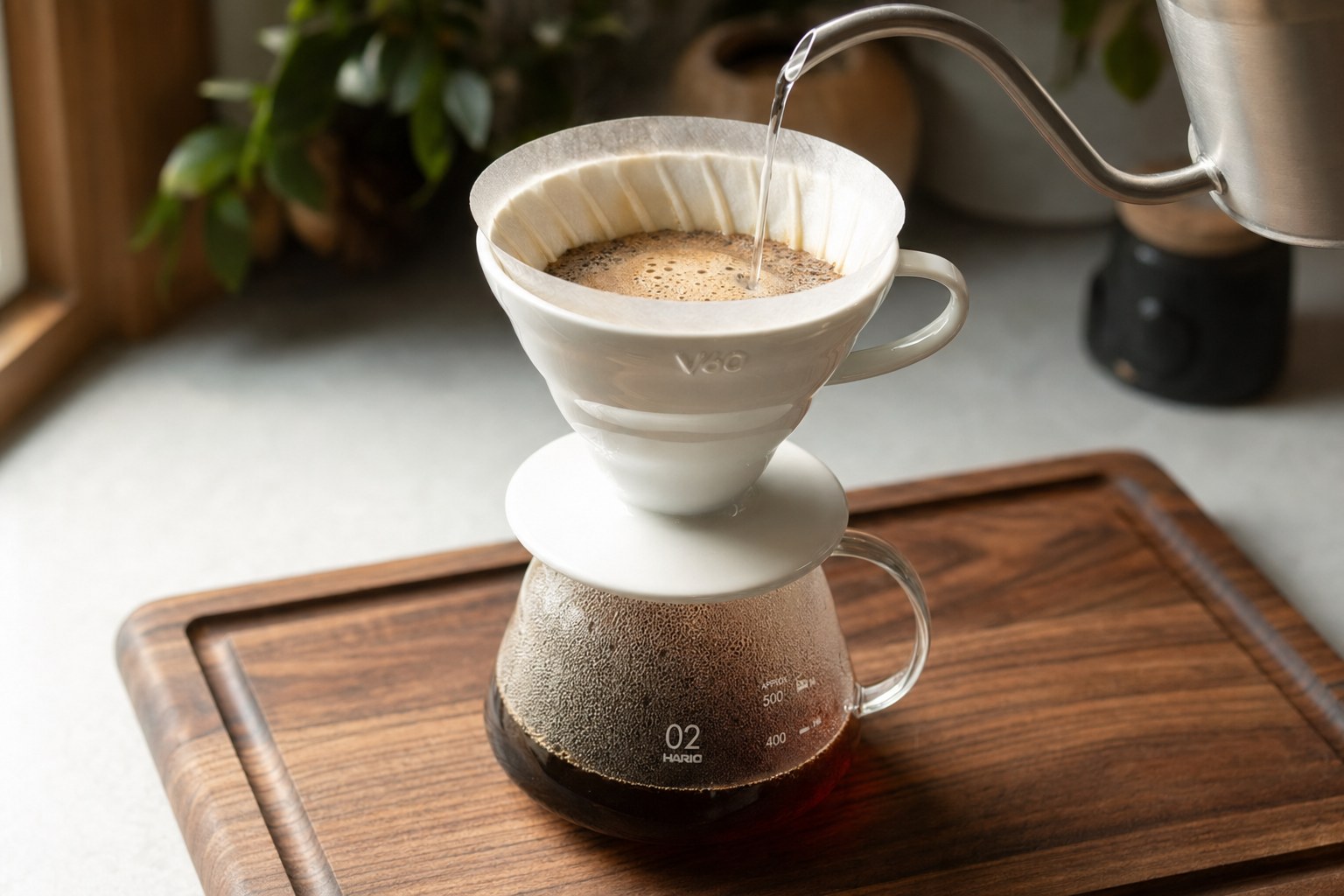
Light roast needs higher water temperature and a finer grind than dark — the Hario V60 is built for exactly this kind of extraction.
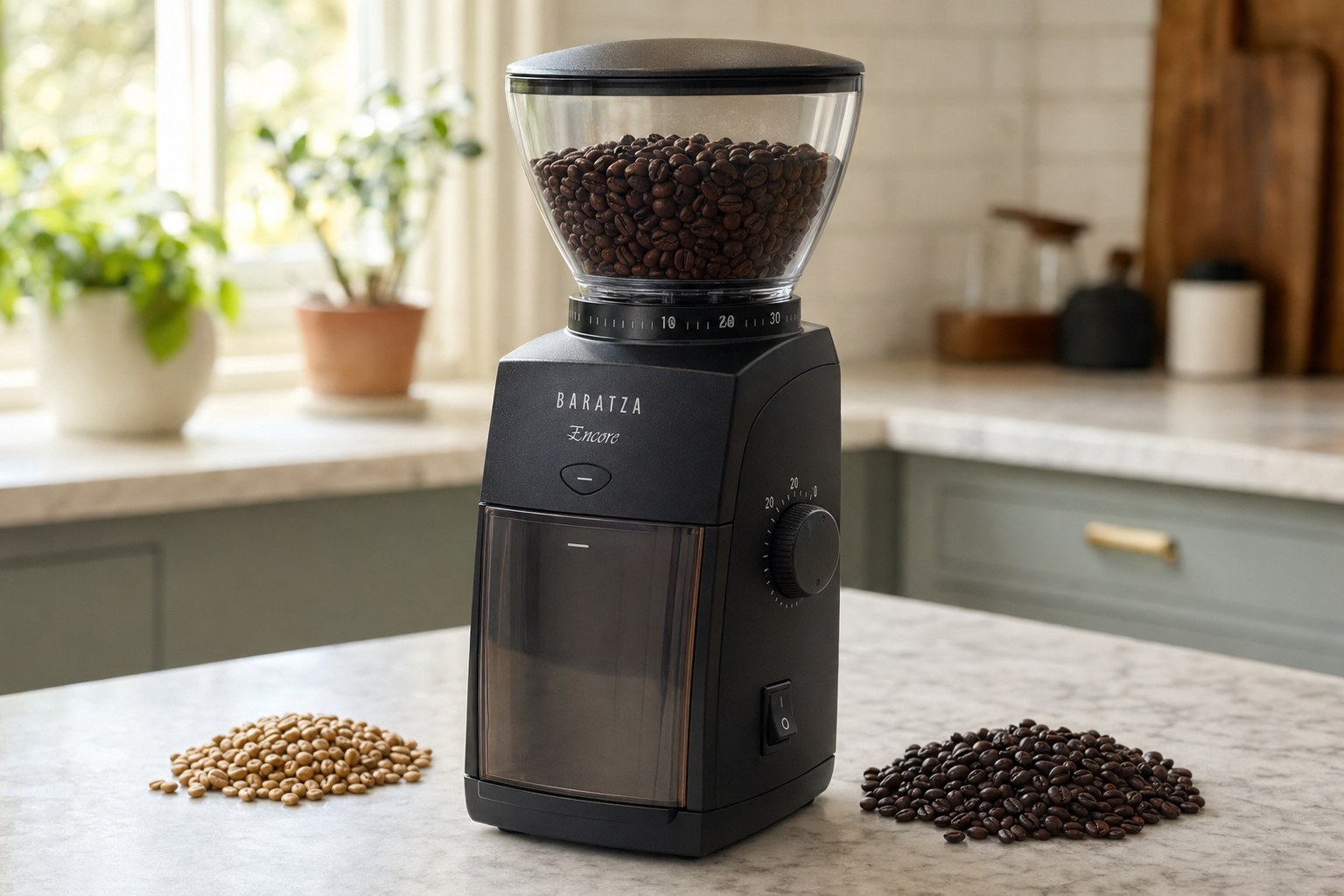
The single biggest improvement you can make regardless of which roast you buy is a burr grinder. The Baratza Encore ($149.95) covers every method above and lets you adjust grind size precisely as you move between a light-roast Ethiopian bag and a dark-roast Sumatran bag. If you’re building drinks from your beans, see our guide to types of coffee drinks for ratio and milk recommendations.
Our verdict: which roast should you buy?
Match the roast to the brewer and the palate, not to the marketing. If you want to taste where your beans came from and you brew pour-over, buy light roast. If you prefer bold, low-acidity coffee or you have a sensitive stomach, buy dark roast: the NMP science is on your side. If your daily driver is a Bodum Chambord or a Bialetti Moka Express, dark or medium-dark is what those machines were engineered to brew.
If you’re just upgrading from grocery-store coffee and you don’t yet know what you like, buy a medium-dark from a local specialty roaster. The grocery-store dark roast bag is the wrong starting point because it has been sitting on a shelf long enough that the surface oils have already gone rancid. Specialty medium-dark hits the same flavor profile most beginners are reaching for, but it tastes the way it should.
If you’re brewing espresso, dark or medium-dark is the traditional choice and the most forgiving. Single-origin light roasts make stunning specialty shots, but they require more dialing-in patience than most home espresso setups can provide.
For most home brewers, dark or medium-dark roast from a specialty roaster is the more forgiving, more consistent entry point. It pairs with the most common brew methods, works in milk drinks, and is kinder to sensitive stomachs. Reach for light roast when you have a V60 and want to taste where your beans came from.
Check dark roast optionsFrequently Asked Questions
Does light or dark roast have more caffeine?
By volume, light roast has more caffeine: about 60 mg per cup versus 51 mg for dark in a 2018 study, because light beans are denser and a tablespoon contains more bean mass. By weight, the two are approximately equal. A 2024 Scientific Reports study found that medium roast may actually peak in extractable caffeine, around 14 to 16% mass loss during roasting.
Is light roast more acidic than dark roast?
Yes, by both taste and chemistry. Light roast contains roughly 270 mg/L of chlorogenic acid versus around 90 mg/L for dark, an 83% reduction. The pH difference is more modest, around 4.9 for light versus 5.3 for dark. All brewed coffee falls in the 4.85 to 5.10 range, so the brightness you taste in light roast is more about CGA content than dramatic pH shifts.
Which roast should I choose if I have acid reflux or GERD?
Dark roast. It contains roughly three times more N-methylpyridinium (NMP) than light roast, 87 mg/L versus 29 mg/L, and NMP down-regulates gastric acid secretion in the stomach lining. A 2014 clinical study by Rubach and colleagues confirmed that dark roast triggers less gastric acid production than medium or light.
Why does my light roast taste sour?
Under-extraction. Light-roast beans are denser and less porous than dark, so they need a finer grind, hotter water (93 to 100 degrees C), and longer brew time to fully extract. Using dark-roast parameters on light-roast beans pulls only the early sour compounds and never reaches the sweet, balanced extraction window. Tighten the grind one step and raise the water temperature.
Which roast is best for pour-over?
Light roast. The paper filter and open Hario V60 design were built to highlight origin character, and light roast is where origin character lives. Use 93 to 100 degrees C water, a medium-fine grind, a 1:15 to 1:16 ratio, and a total brew time of 2.5 to 3.5 minutes.
Which roast is best for French press?
Medium-dark to dark. The metal mesh filter passes the natural coffee oils into the cup, which amplifies the bold, chocolatey notes dark roast specializes in. Use 88 to 93 degrees C water, a coarse grind, a 1:15 ratio, and a 4-minute steep.
Do light roast beans go stale faster than dark roast?
No, the opposite is true. Light roast's denser, drier bean structure slows oxidation, giving a peak window of roughly 4 to 8 weeks post-roast. Dark roast develops surface oils during the late stages of roasting, and those oils oxidize quickly. Both roasts peak around the same point, but dark roast degrades faster, with a 2 to 4 week window.